
30

Weather Alert in Several Districts

The weather in Bihar is set to turn unstable on Monday, with the Meteorological Department predicting thunderstorms and rain in 32 districts of the state, including the state capital Patna. However, six districts in southwestern Bihar are expected to experience dry conditions.The weather in Bihar is set to turn unstable on Monday, with the Meteorological Department predicting thunderstorms and rain in 32 districts of the state, including the state capital Patna. However, six districts in southwestern Bihar are expected to experience dry conditions. At present, maximum temperatures in many districts of Bihar are ranging between 30 and 33 degrees Celsius. Once the cloud cover clears after March 12, stronger sunshine is expected, which may push the maximum temperature up to around 34 to 36 degrees Celsius.

Weather Alert in Several Districts Read More »

29

Recent Tragic Incident

A tragic stampede occurred at the Maa Sheetla Mandir in Nalanda, resulting in multiple deaths and injuries.Overcrowding beyond the temple’s capacity Poor crowd management and security arrangementsBroken queues and barricades, leading to sudden rush Panic after people started falling in the crowd The Nalanda stampede is a serious reminder of the importance of crowd management during large religious gatherings. Proper planning, safety measures, and administrative control are essential to prevent such tragic incidents in the future.

Recent Tragic Incident Read More »

28

Public Grievance Program in Munger

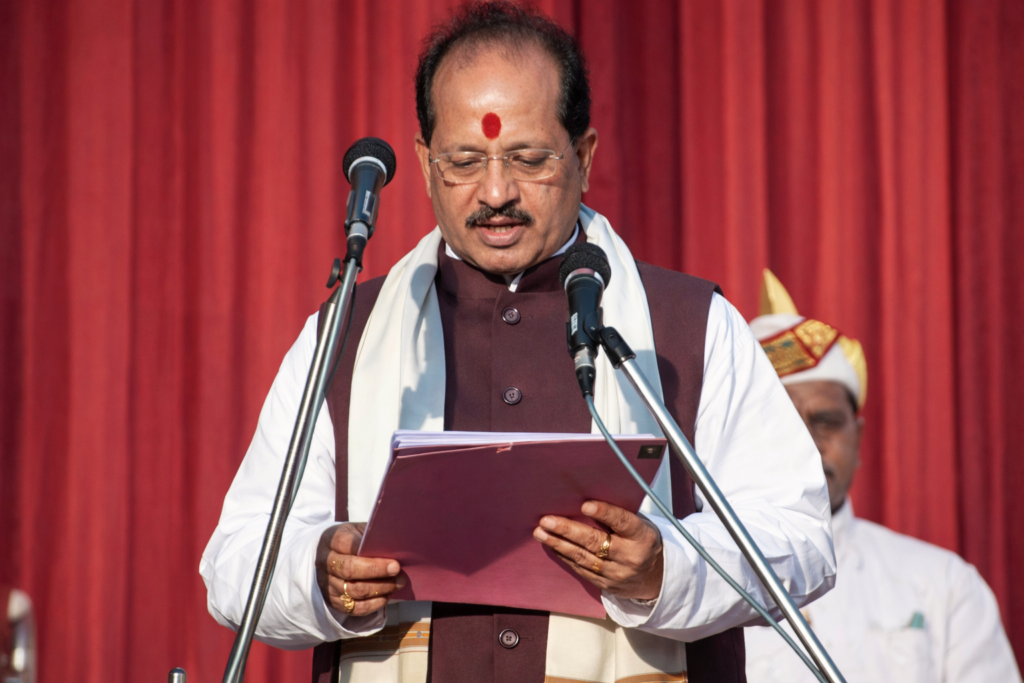
A जनसंवाद (public dialogue) program is being held in Munger. Citizens can directly present land-related issues.Separate counters set up for different regions.The initiative aims to increase transparency and resolve pending land disputes faster.This program was organized in Munger on 4 April 2026, where people could present their complaints directly to government officials, including Deputy Chief Minister Vijay Kumar Sinha. The Public Grievance Program in Munger is an important step by the Bihar government to bring administration closer to the people. By allowing direct communication and faster resolution of issues, especially related to land, it helps improve governance and public satisfaction.

Public Grievance Program in Munger Read More »

26

340 New AC Buses to Improve Transport

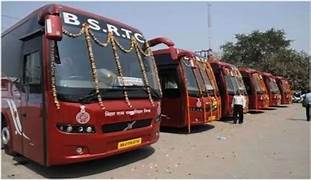
The Bihar government is planning to introduce 340 new AC buses, mainly in Patna and other districts. Online ticket booking and monthly passes will be available.Special reserved seats for women, elderly, and differently-abled. This move aims to modernize public transport and improve passenger comfort.The buses will be introduced in phases, beginning with key urban centres including Patna, Gaya, Bhagalpur, Rajgir and Nalanda. Authorities said the allocation of buses across districts would be determined based on population size and geographic spread to maximise coverage.

340 New AC Buses to Improve Transport Read More »

25

Communist Party of India

The Communist Party of India (CPI) is a national political organization advocating Marxism–Leninism and socialism within India’s democratic framework. Established in 1925, it is one of the country’s oldest political parties and a key component of the Indian Left movement, historically active in trade unions, agrarian reforms, and anti-imperialist struggles.Although its parliamentary strength has declined since the 1980s, the CPI remains influential in labor and social movements, particularly in Kerala, Tamil Nadu, and parts of Andhra Pradesh and Bihar. It continues to campaign for secularism, social justice, and resistance to neoliberal economic policies while coordinating with other left parties through the Left Front The CPI was formed by a group of anti-colonial activists inspired by the October Revolution. Its early leaders—such as Manabendra Nath Roy and S. V. Ghate—sought to merge national liberation with a socialist program. Initially banned under British rule, it gained legal status in 1942 and expanded rapidly after independence, advocating land redistribution, women’s equality, and workers’ rights.

Communist Party of India Read More »

24

The Indian National Congress (INC) is a major political party in India, founded in 1885. It led India’s movement for independence from British rule and became the dominant force in Indian politics for decades after 1947, shaping the nation’s democratic and secular identity.The INC functions through the All India Congress Committee and Pradesh Congress Committees at state levels. Its current agenda emphasizes protecting constitutional values, promoting equality, and fostering sustainable development. Campaigns like the Bharat Jodo Yatra highlight its focus on unity and social harmony Established by Indian reformers and British civil servant Allan Octavian Hume, the INC began as a forum for moderate reform within colonial structures. Under leaders such as Bal Gangadhar Tilak, Mahatma Gandhi, and Jawaharlal Nehru, it evolved into the principal vehicle for India’s struggle for independence. Gandhi’s philosophy of nonviolent civil disobedience transformed the INC into a mass movement culminating in independence in 1947

Read More »

23

Bharatiya Janata Party (BJP)

The Bharatiya Janata Party (BJP) is a major national political organization in India. Established in 1980 as the successor to the Bharatiya Jana Sangh, it promotes a platform of cultural nationalism, economic growth, and strong governance. The BJP currently leads India’s ruling coalition, the National Democratic Alliance, under Prime Minister Narendra Modi.Advocating “Nation First, Party Next, Self Last,” the BJP views national unity and development as intertwined with India’s cultural identity. Its rise has significantly reshaped India’s political landscape, challenging the dominance of the Indian National Congress and influencing debates on secularism, federalism, and national security.  The BJP traces its roots to the Rashtriya Swayamsevak Sangh-affiliated Bharatiya Jana Sangh founded by Syama Prasad Mookerjee in 1951. Its philosophical foundation is Integral Humanism, articulated by Deendayal Upadhyaya, emphasizing a balance between individual, society, and nation. The party espouses “positive secularism” (equal respect for all faiths) and “Antyodaya”—upliftment of the most marginalized.

Bharatiya Janata Party (BJP) Read More »

22

Rashtriya Janata Dal (RJD)

Rashtriya Janata Dal (RJD) is a regional political party in India, primarily influential in the state of Bihar. Founded in 1997 by Lalu Prasad Yadav, it emerged from a split within the Janata Dal and has since positioned itself as a key voice for social justice and secularism in Indian politics.As of 2026, Lalu Prasad Yadav remains party president, with his son Tejashwi Yadav serving as national working president and principal leader in Bihar. The RJD continues to advocate pro-poor and secular policies, sustaining its role as a central actor in Bihar’s political landscape and a symbol of caste-based social empowerment in India The RJD was established when Lalu Prasad Yadav and several parliamentarians broke away from the Janata Dal to form a party grounded in socialist values inspired by Jayaprakash Narayan. Its central philosophy promotes social equality, economic justice, and protection of minority rights. The party draws much of its support from Other Backward Classes (OBCs), Dalits, and Muslims, advocating an inclusive, secular state.

Rashtriya Janata Dal (RJD) Read More »

21

Janata Dal (United) (JD(U))

Janata Dal (United), commonly abbreviated as JD(U), is a center-left political party in India with its primary base in Bihar. It espouses socialism, secularism, and inclusive development and has been a key force in Indian coalition politics, often shaping state and national governments through strategic alliances. As of 2026, JD(U) governs Bihar in coalition with the BJP within the NDA and maintains representation in both houses of India’s Parliament. Its organizational elections and membership expansion continue across several states, positioning it as a pivotal regional actor with national influence JD(U)’s philosophy blends Gandhian and Lohiaite socialism with developmental pragmatism. It emphasizes “Nyay ke saath vikas” (“development with justice”), gender equality, and secular governance. Bihar’s literacy gains, women’s empowerment policies, and social welfare programs under Nitish Kumar have been central to its identity.

Janata Dal (United) (JD(U)) Read More »